
Concrete Slabs and Aprons Big Country TX: Building Slabs and Working Pens
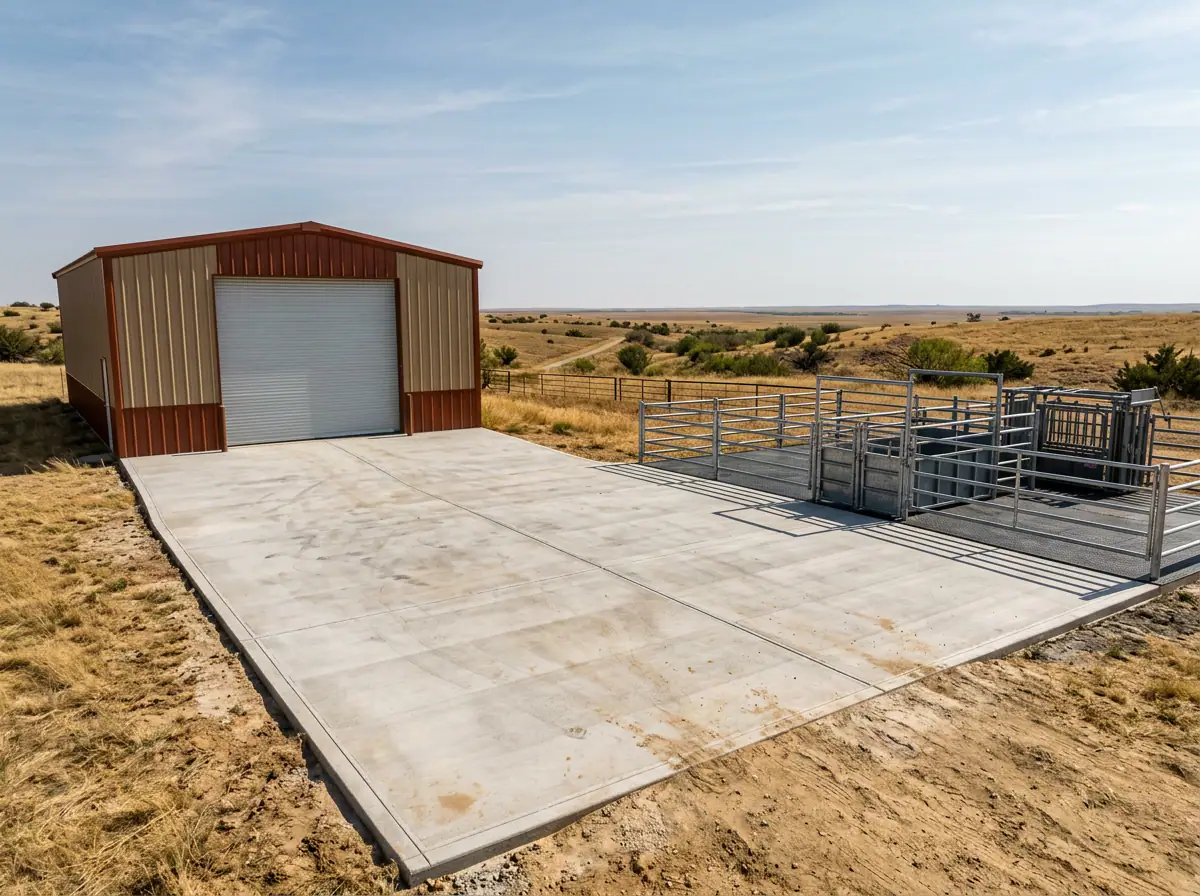
You can re-skin a building. You can add a lean-to, swap a door or hang a new gutter. What you cannot do is go back and move a slab. When it comes to concrete slabs and aprons Big Country TX ranch owners need to get right, the pour is the decision that sits under every other decision on the property, and it stays there for decades.
At Show Iron, we pour concrete as part of a single-contractor build out of Aspermont, in Stonewall County. The same crew handles the dirt work, the slab and the steel, so everything is engineered to work together. This article walks through what we pour, how a good slab is built, and what to ask any concrete slab contractor before you sign.
What We Pour: Concrete Slabs and Aprons in Big Country TX
Ranch concrete is more than a shop floor. Here is the range of flatwork we handle across the Big Country and West Texas:
- Building slabs for equipment barns, working shops, hay and commodity storage, animal processing facilities and hunting lodges.
- Concrete aprons and drive-in approaches at overhead doors, so trucks and equipment have a solid place to land.
- Working pens and alleys for cattle handling, sorting and loading.
- Equipment pads for fuel tanks, generators, feed bins, water systems and other heavy items that should not sit on bare dirt.
- Other ranch flatwork that ties a facility together, such as walkways, wash areas and loading zones.
Some clients call us for a turnkey steel building and get the slab as part of the package. Others have an existing facility and need pens or an apron added. Both are normal work for us, and both get the same attention to base, reinforcement and finish. You can see what our ranch construction and infrastructure work covers beyond concrete.
Why the Steel Building Slab and the Building Should Be One Contractor's Job
A steel building concrete slab in West Texas is not just a flat piece of concrete with a building set on top. It is the connection point between the ground and the steel frame, and the details have to match the building package exactly.
Anchor bolt placement
Anchor bolts have to land where the building's column plates will sit. If they are off, you get field fixes, shimming or drilled replacements, and none of those are what you wanted from a new building. When one crew reads the building plans and sets the anchor bolts, there is no handoff where a measurement gets lost.
Thickened edges and grade beams
Most steel building slabs need a thickened edge or grade beam around the perimeter, because that is where the frame loads travel into the ground. The right design depends on the building size, the loads, the soil and the engineering for the structure. We build the slab to the building's requirements instead of pouring a generic pad and hoping the steel fits.
Squaring the slab to the building package
A slab that is a little out of square or out of dimension causes problems all the way up the building: framing that fights you, panels that do not line up, doors that bind. Because we control every phase, the slab is laid out and formed to the actual building we are erecting. Concrete cures while the steel is staged, so there are no gaps between trades and no one to blame when something does not line up.
That is the logic behind One Call, One Crew, One Standard. If you want to see how the slab fits into the larger process, our turnkey steel building page lays it out.
Site Prep and Dirt Work Before Any Concrete
The pour gets the attention, but the work underneath decides whether the slab lasts. Good site prep and dirt work usually includes:
- Clearing brush, roots, rock and anything organic that will break down and leave voids.
- Grading and shaping the pad so it sits where it should relative to the surrounding land.
- Base material placed in controlled lifts so the slab has even support.
- Compaction of the subgrade and base. Soft spots under a slab turn into cracks and settling later.
- Vapor barrier under building slabs where moisture control matters, especially for shops, lodges and insulated buildings.
- Drainage and slope so water runs away from the building and the slab edges, not toward them.
West Texas soils vary from property to property, and the right base depends on what is actually in the ground. A contractor who skips the dirt work or subs it out to someone who never sees the finished slab is cutting the corner you will pay for later. Because our crew does the dirt work, the same people who prepare the pad are the ones who stand behind the concrete on top of it.
Concrete Working Pens and Alleys on a Ranch
Concrete working pens on a ranch take more abuse than almost any other flatwork. Hooves, wet weather, manure, equipment and constant washdown all work against the surface. A good design plans for that from the start.
Footing and traction
Cattle need to keep their feet. A slick surface is a safety problem for animals and for the people working them. A textured finish, such as a broom finish or a grooved surface, gives traction without making the pen impossible to clean. The right texture depends on how you use the facility, and it is worth talking through before the pour instead of after.
Washdown and drainage
If you plan to wash down pens and alleys, the slab needs slope and a place for water to go. Control joints, slope direction and drain locations should be planned together so the surface sheds water instead of holding it. Standing water and manure are what shorten the life of a pen.
Layout with the rest of the working facility
Pens should not be an afterthought to the barn. Think about how animals move from holding pens to alleys to the chute, where trucks and trailers load, and where a shop or equipment barn sits relative to all of it. Planning flatwork alongside the structures saves rework. If you are adding pens to an existing facility, we can look at what is there and pour to fit it.
Concrete Aprons for Metal Buildings: Size for the Equipment You Actually Use
An apron is the slab between your building and the rest of your property. Concrete aprons for metal buildings keep the area around overhead doors from turning into a rutted, muddy mess, and they protect the edge of the main slab from traffic damage.
The way to size one is to start with what drives on it. Think about the longest trailer you pull, the turning radius of your trucks, and the heaviest equipment that will cross it. An apron that works for a pickup and a small trailer may not be enough for a gooseneck, a hay hauler or a tractor with implements. Thickness and reinforcement should match the loads, and the approach should be sloped so water drains away from the door.
It is cheaper to pour a properly sized apron with the building than to come back later and tie new concrete into old.
What Drives the Price of Ranch Concrete Flatwork in West Texas
We are not going to quote numbers in a blog post, because every site is different. We will tell you what moves the price:
- Slab size and thickness. More area and more depth means more concrete and more labor.
- Reinforcement. Rebar reinforcement, spacing and any thickened edges or grade beams add material and labor.
- Site condition and dirt work. A level, clear site is a different job than one that needs clearing, fill and heavy compaction.
- Distance from town. Remote ranch land adds travel and affects concrete delivery logistics.
- Access. Gates, creek crossings, caliche roads and wet-weather conditions can change how trucks reach the site.
- Timing. Scheduling around your cattle work, hunting season and the rest of the build affects the plan.
We will say it plainly: Show Iron charges a premium. We are not trying to be the cheapest bid on your desk. You are paying for the base, the steel and the finish being done right the first time, by a crew that answers for all of it. Our free estimates come as one comprehensive figure, not a stack of separate trade bids.
Building on Remote West Texas Ranch Land
Concrete is a clock. Once it is mixed, the crew has a limited window to place and finish it, so pouring on rural ranch land takes planning. Delivery from the plant, haul time, road conditions, weather and crew readiness all have to line up. That is why prep comes first: forms set, base compacted, reinforcement and anchor bolts in place and checked before the trucks leave.
A lot of our clients are absentee owners who live in Dallas or farther away. They need a contractor who can work on their own and keep them informed. We plan projects around livestock operations and hunting seasons, and we send remote progress updates so you know where the job stands without driving out to check. Because one crew runs the whole build, most standard shops and barns finish in weeks, not months.
Want a look at the finished product? Our project gallery shows real concrete, steel and crews on West Texas ranch land. You can also read more about how Show Iron got started and why the name means what it means.
Concrete Slab and Flatwork FAQ
Do you pour the slab for a steel building you supply?
Yes. Our turnkey builds include the dirt work, the slab and the steel, all by one crew, so the slab is built to match the building going on top of it.
Do you travel outside Aspermont?
Yes. We are based in Aspermont and work across the Big Country and West Texas, including clients in Abilene and surrounding areas. Distance from town affects the price and scheduling, so contact us with your location and we will tell you what is realistic.
Can you pour working pens on an existing facility?
Yes. We can add concrete pens, alleys and aprons to an existing setup and plan the layout around what you already have.
Do you do concrete only, or only full builds?
Our focus is turnkey work, but flatwork such as working pens, aprons and equipment pads is a listed service. Tell us what you need and we will let you know how we would approach it.
What finish do you use on pens and aprons?
It depends on the use. For traction and washdown, a textured finish such as a broom finish is common, with control joints and slope planned for drainage. We talk through the options before the pour.
How do I get a price?
Request a free estimate. We give a single comprehensive figure based on slab size, reinforcement, site condition, access and timing.
Get the Slab Right Before Anything Else Goes Up
Whether you need a building slab, a set of working pens or an apron that can handle your heaviest rig, the right time to plan the concrete is before anything else gets built on it. Start a Quote online, or call 806-690-2203 to talk through your slab, pens or full build.